
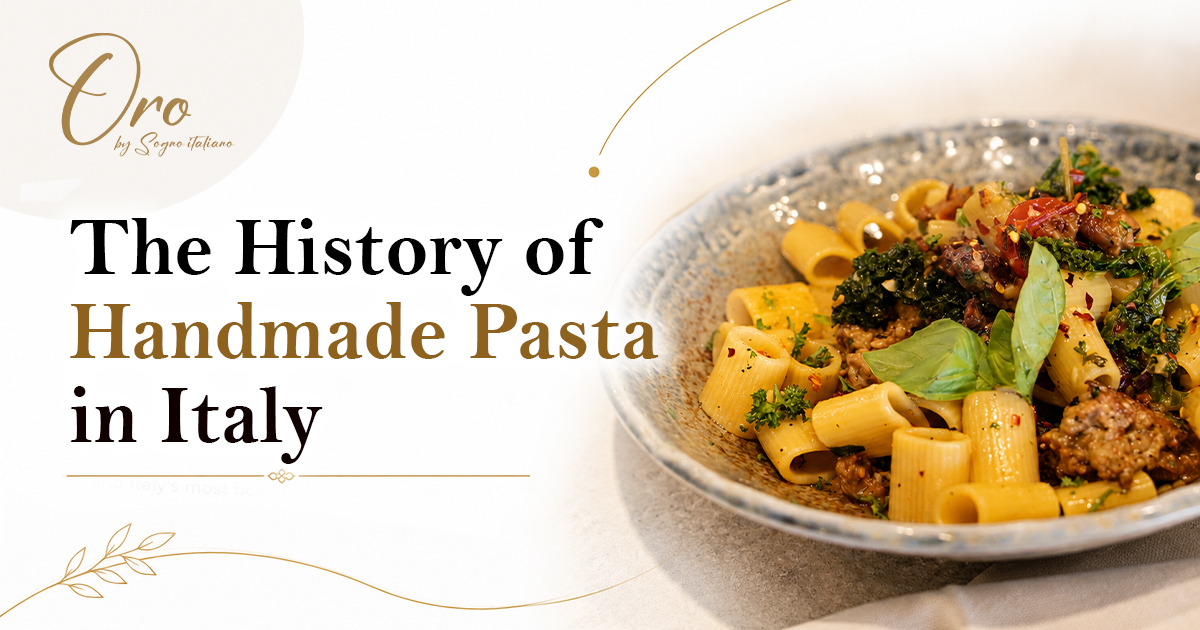
In Italy pasta is not just food, it is tradition and generations of culinary skill. It has been a staple of Italian culture for generations, whether at holiday gatherings or everyday suppers. Handmade pastas are loved the most in particular, with its traditions painstakingly passed down through generations and it’s one of many we love. The basic mixture of flour and water has become an art form, each region creating its own unique shapes and recipes that have their own language. Modern production has made pasta readily available but authentic Italian restaurants still hold to these time-honoured methods for a flavour, texture and experience that machine-made pasta cannot match. In this blog you’ll read about the amazing history of handmade pasta, the traditions of making it and why it is still at the heart of real Italian dining.
There are many fascinating myths in the history of pasta, the most popular of which is that Marco Polo brought it to Italy on his return from China. But history has taught us that pasta-like foods were around long before he ever set sail. The Greeks, Romans, and Etruscans were all ancient civilizations that made simple doughs from flour and water and baked or boiled them in a variety of forms.The Mediterranean was a trade route that allowed different cultures to share ingredients, techniques and recipes, allowing pasta to evolve.Italy took on these influences and this is how pasta became a staple in the Italian diet. Each region has its specific shapes, and it has its own traditional recipes. Today Handmade Pasta is a tribute to this rich heritage, to centuries-old traditions that echo Italy’s love for quality, craftsmanship and genuine tastes.
Pasta was being made lovingly at home in Italy long before it was a restaurant staple, and it was part of the everyday food. Children watched parents and grandparents mix, knead, roll and shape the dough with care to make handmade pasta. Every family had their own favorite recipes and would often be quite protective of little techniques and ratios of ingredients, almost as fiercely as they protected traditions themselves. Nonna, the grandmothers, were the main individuals who passed down these techniques to the next generation. In this way, it ensured that every batch was infused with a legacy of experience and love. Cooking pasta was never a solo act, it was a family affair that brought loved ones to the kitchen table together with love and taste. These fond traditions continue to inspire authentic Italian restaurants where traditional handmade methods celebrate the warmth, heritage and sense of togetherness that is Italian cuisine.
Beautiful in its simplicity, Handmade Pasta uses a few carefully selected ingredients to create remarkable flavour and texture. Various types of flour are selected depending on what style of pasta is being produced . These include durum wheat flour and soft ” 00 ” flour. Semolina is a coarse, rich golden colour and is especially prized for making firm pasta with a pleasant bite. Eggs are often used to enrich the dough but many traditional regional recipes, especially in southern Italy, use water. Some recipes also add a small amount of olive oil to increase elasticity and make the dough easier to work with. Instead of using long lists of ingredients, Italian pasta is made with very few ingredients as they believed in quality over quantity. Hence, it proves that fresh, premium ingredients when combined with skilled craftsmanship are all that’s needed to create an unforgettable taste which is equally fulfilling.
Handmade Pasta is a rich, egg-based pasta that is typical of Northern Italy. The many dairy farms and fertile farmland in the region have made it a staple. Popular choices include Tagliatelle, which is often served with a slow-cooked Bolognese sauce, pappardelle, which is traditionally served with a rich game or mushroom ragù and lasagne, which is layered with béchamel, meat sauce and cheese. Typical ingredients include butter, cream, Parmigiano Reggiano and fresh herbs, producing comforting dishes that are representative of the region’s decadent style of Italian cooking.
Central Italy is a celebration of rustic simplicity, with fresh local ingredients at the heart of it all. In central Italy, it’s all about rustic simplicity. Fresh, local ingredients are the main event. Pici is a thick, hand-rolled pasta from Tuscany, usually served with a tomato sauce that contains garlic, wild boar ragù or cacio e pepe. Another regional favourite is fettuccine, which is perfect with creamy mushroom sauces, rich meat ragù or butter and Parmesan. Handmade techniques are still very much part of family traditions, producing pasta with a satisfying texture that suits the region’s bold but unfussy flavours.
The cuisine of Southern Italy reflects the warm climate and agricultural heritage and includes Handmade Pasta made with durum wheat and water. Orecchiette (“little ears”) is famously served with broccoli rabe, garlic, olive oil and chilli, while Cavatelli is often served with tomato-based sauces, ricotta or seasonal vegetables. Olive oil, tomatoes, seafood and fresh vegetables are the basis for Southern Italian cooking, which results in bright, healthy dishes that show off the best in regional produce.
Sardinia and Sicily are home to distinctive pasta traditions, influenced by local ingredients and centuries of cultural exchange. Sardinia’s Malloreddus, or Sardinian gnocchi, are normally served with sausage and tomato sauce, and sprinkled with Pecorino cheese. Sicilian Busiate is best served with aromatic pesto alla Trapanese or fresh seafood sauces. These regional specialties celebrate the islands’ love of bold Mediterranean flavors, and that is how simple ingredients turn into memorable, authentic pasta dishes.
Pappardelle is a Handmade Pasta from Tuscany that is wide and ribbon-shaped and traditionally made with eggs and flour. Its generous surface is suited to hearty, slow-cooked sauces, and it is a favourite partner for wild boar, beef or mushroom ragu. Its name derives from the Italian word pappare, meaning “to gobble up.” This pasta is just as satisfying and hearty. Pappardelle dates back to the Middle Ages, and has long been associated with rustic Tuscan country cooking, where hunters would make hearty meat sauces to match its generous shape and texture.
Fettuccine comes from Central Italy, particularly Rome and the Lazio region. A Handmade Pasta, similar to Pappardelle, but slightly narrower. This is a flat ribbon-like pasta and is traditionally made with fresh eggs. It goes great with creamy sauces like Alfredo, and with butter, Parmesan, mushroom or meat ragù. Fettuccine has been around for centuries, but it was Fettuccine Alfredo, created in Rome in the early 20th century, that made it a worldwide sensation. It has a nice smooth but firm texture that takes on sauces well, so you end up with a nice balanced and tasty meal.
Orecchiette, meaning “little ears,” comes from Puglia in Southern Italy and is characterized by its small, ear-shaped form. This unique Handmade Pasta is made from durum wheat semolina and water, resulting in a firm texture that holds sauces perfectly. Tomato and sausage sauces are popular, and are most famously served with broccoli rabe, garlic, olive oil, chilli flakes and anchovies. It’s one of Italy’s most durable symbols of regional culinary heritage, as local families have been hand-shaping orecchiette for generations.
Gnocchi, a potato dumpling rather than pasta in the traditional sense, is a much-loved Italian specialty, and often appears with Handmade Pasta. It is from Northern Italy. Potatoes came to Europe and became a staple. Soft and pillowy, Gnocchi is wonderful with sage butter, tomato sauce, pesto or a creamy Gorgonzola sauce. Gnocchi is a traditional Italian dish that many families serve on Thursdays, a tradition that has been handed down through the generations.
Handmade Pasta Making is an art. It begins with mixing simple ingredients by hand until a smooth and workable dough is formed. A gentle knead will develop the elasticity of the dough, allowing the pasta it’s signature texture, and allow it to rest to relax the gluten for easier shaping. Then, pasta makers who are well-trained roll out the dough with a traditional wooden pin and they do it by hand, no machines, so they can control the thickness. The sheets are then cut by hand into different shapes depending on regional customs and family preferences. Pasta is air-dried or cooked fresh to improve its shelf life and flavor and that depends on its type. These techniques are not just cooking methods, they are valuable skills that have been handed down from generation to generation. These methods safeguard Italy’s rich culinary legacy through experience, patience and craftsmanship.
Handmade pasta and dried pasta, both these types are important to Italian cooking. But they have different qualities and are appropriate for different dishes. Handmade pasta is often made with fresh eggs, flour and sometimes water, which results in a soft and delicate texture and also ensures a rich and fresh flavor. It cooks quickly, often in minutes, and works well with creamy sauces, butter sauces, or light meat ragùs to show off the texture.
Dried pasta is usually made with semolina from durum wheat and water, which is then carefully dried to make it last a long time. It has a firmer bite, takes a little longer to cook and is perfect for hearty tomato sauces, seafood dishes and slow-cooked recipes. Dried pasta is a pantry staple throughout Italy, but for special occasions many traditional Italian families and authentic restaurants still prefer Handmade Pasta, because of the craftsmanship, freshness and authentic character that only handmade techniques can provide.
There are many reasons Handmade Pasta tastes great. First and foremost, they are made with care and craftsmanship that goes into every stage of its preparation. They are mostly small batch produced and have a natural flavor and delicate texture that the other mass produced alternatives often lack. This is done just before cooking so that the pasta is fresh and has a soft, tender bite but still holds its shape. Its surface is slightly porous, so it holds the sauce better, giving each mouthful a rich balance. With a focus on quality ingredients like premium flour, fresh eggs and carefully selected semolina, it’s all about adding flavour without unnecessary additives. Made with the utmost attention to detail, each piece of Handmade Pasta is hand moulded to give it its own unique character and shape of course with just a slight variation.
Commercial food production has come a long way, but alongside many genuine Italian restaurants still make Handmade Pasta fresh each day. In this way it preserves the flavors and traditions of Italian cuisine. Although modern kitchens may have specialized equipment to ensure consistency, the basic techniques for mixing, kneading, shaping and finishing the pasta are based on age-old craftsmanship. Only talented chefs, with years of experience and a knowledge of traditional recipes and regional styles, can preserve these standards. The diner likes pasta made fresh because it tastes and feels better, but also because you can tell it was made with care and is authentic. Opting for Handmade Pasta is a commitment to quality: it allows restaurants to offer an authentic Italian dining experience that honors tradition, while fulfilling the expectations of today’s diners.
Why is Oro Italiano different from other Italian restaurants? The answer is simple, each plate of Handmade Pasta from Oro Italiano is freshly made and is a living example of Italy’s rich culinary heritage. The menu is built on traditional Italian techniques, focusing on fresh pasta, quality ingredients and time-honoured methods to enhance the natural flavour and texture. Each dish is prepared with care, respecting the simplicity and quality that make good Italian cuisine. No magic bullets. Seasonal ingredients can also inspire limited time pasta creations, so guests get to enjoy a variety of flavors throughout the year, while still paying homage to Italian traditions. Whether it’s a casual lunch with a group of friends or a special occasion, Oro Italiano would love to let you experience the warmth, craftsmanship and the unmistakable taste of freshly made Italian food, one painstakingly cooked pasta dish at a time.
For generations, Handmade Pasta has remained at the heart of Italian cooking. It has been carrying stories of family traditions, regional recipes with it. Although the way we dine has changed over the years, the care and skill involved in making fresh pasta continue to make it something truly special. Every shape, every recipe, and every technique reflects the rich heritage of Italy and the people who have kept these traditions alive. When you choose handmade pasta at an authentic Italian restaurant, you’re enjoying more than a delicious meal you’re experiencing a piece of Italian culture that has been passed down through countless generations. It’s this connection to tradition that makes handmade pasta unforgettable, one plate at a time.
Ans. Handmade pasta is fresh pasta that is made by mixing a few simple ingredients. The ingredients are flour, eggs, water and sometimes semolina. Then kneading, rolling and shaping the dough by hand is done. It is valued for its fresh flavour, delicate texture and capacity to absorb sauces better than many commercially produced varieties.
Ans. Handmade pasta was a staple of Italian cuisine in the Middle Ages, even though pasta-like foods were known in the ancient Mediterranean civilisations. With time, each region created its own recipes and techniques plus its own unique pasta shapes, the rich traditions still alive today.
Ans. Homemade pasta isn’t necessarily healthier than dried pasta but it’s usually made with fresh, high-quality ingredients and has less preservatives. Fresh pasta tends to be softer and more fragile. Dried pasta has a longer shelf life and is equally nutritious if made from good durum wheat.
Ans. Many authentic Italian restaurants serve Handmade Pasta for better flavour, texture and freshness over traditional cooking styles. Fresh pasta also lets chefs use different shapes with different sauces, which adds to the authenticity and enjoyment of the meal.
Ans. In several Italian regions, handmade pasta boasts a famous tradition. Pappardelle and Pici are Tuscan, Tagliatelle and Lasagne Emilia-Romagna, Fettuccine Lazio, Orecchiette Puglia, Malloreddus Sardinia and Busiate Sicily. Each area talks about its products, its history, and its own culinary culture.