
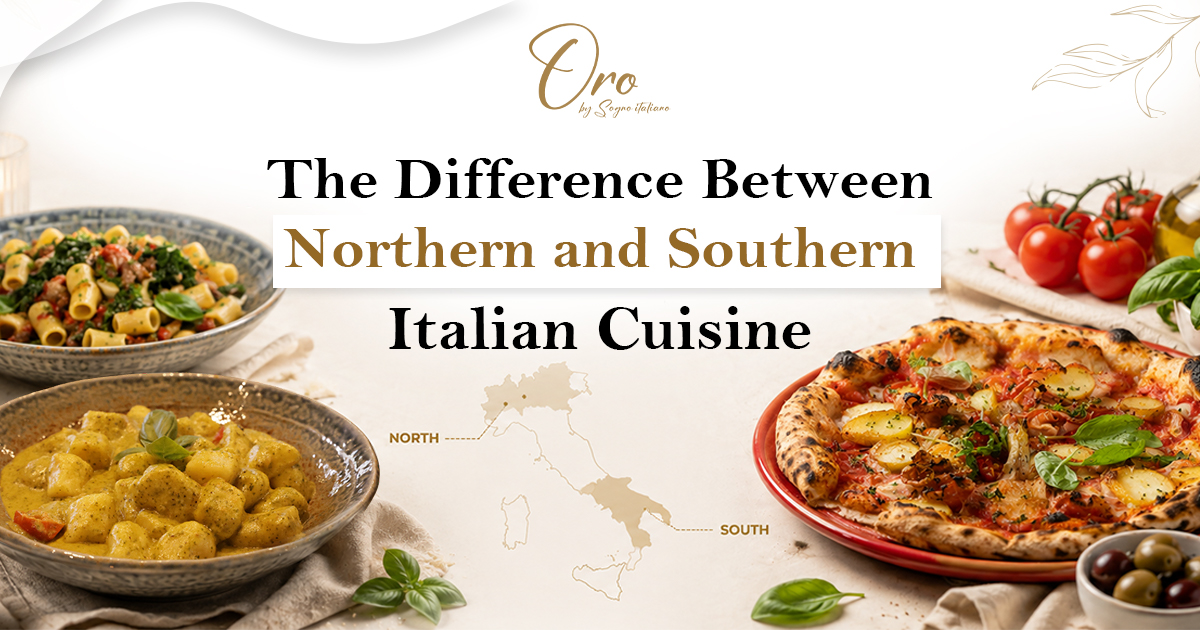
While Italy is often celebrated for its pasta, pizza, cheese and rich culinary traditions, there is no one way to define Italian cuisine. As you travel from the northern mountains to the sun-soaked southern coast, you will find that food can change dramatically from one region to another. Each region has its own ingredients, cooking techniques and beloved Italian dishes, influenced by the land, climate and generations of local tradition.
The contrasts are particularly interesting when you compare North Italian cooking to South Italian cooking. Northern Italian food is often linked with creamy sauces, butter, risotto, fresh egg pasta and rich cheeses, while Southern Italian food tends to highlight tomatoes, olive oil, vegetables, seafood, herbs and bold, sun-ripened flavors. But basically these are not differences of taste, they are differences born from centuries of geography, farming, trade and history. The north’s cooler climate and fertile plains were conducive to growing grains, raising dairy animals and producing the ingredients that went into heavier meals. In the south, the warmer climate, coastal geography and Mediterranean agriculture influenced a cuisine based on olive oil, tomatoes, fresh produce and seafood. These regional differences are the keys that make the culture of Italian food so diverse and interesting.
So, Northern vs Southern Italian food, is one really better than the other? Or does each have something uniquely delicious? Let’s look at the differences between the two cuisines and see which one you might prefer.
An interesting thing about Italian food is that there is no single universal recipe book. The food of a mountain village in the north can be very different from that of a coastal town in the south. Such differences have grown naturally over the centuries, with each region doing the best it could with the land, climate and history it had.
Italy is a country of great variety, ranging from the Alps in the north to the Mediterranean islands in the south. The north has colder winters, fertile plains and mountainous areas, while the south is usually sunnier and warmer. Everything from the crops that are grown to the types of dishes that are traditionally cooked has been determined by these conditions.
In the days before modern transportation made ingredients easily available, Italian communities were heavily reliant on what was available to them. This, of course, affected the regional cooking of Italy. The north developed a strong tradition of dairy produce, rice, corn and wheat, while the south made greater use of tomatoes, olives, aubergines, peppers and citrus fruits, and other Mediterranean produce.
Italian food culture has always been very much farm-centric. Farming methods developed in different regions were adapted to their own soil and climate. Rice became a staple in parts of the north. Olive and grape growing thrived in many southern regions. Those same local farming traditions still impact the ingredients of traditional dishes today.
Italy’s culinary identity has also been shaped by centuries of trade, migration, invasions and foreign rule. When different regions came into contact with different cultures, which eventually brought new ingredients, techniques and flavors. With time these influences were absorbed into local traditions and formed the unique food identities we know today for different areas of Italy.
Location is also important. Fresh fish and seafood were more easily available to coastal communities and thus were a staple in many local dishes. Meanwhile, the interior and mountains relied more heavily on grains, meat, cheese, legumes and preserved foods that could be stored for long periods.
Tradition may be the most important influence. Gradually, over time recipes and cooking techniques have been passed down from parents and grandparents to the younger generations, often with each family adding its own touch. That is why real Italian food is so closely tied to local identity. A dish is not only for eating; it can be representative of the history, the landscape and the traditions of an entire community.
All of these influences add up to explain why a comparison of Northern vs Southern Italian cuisine reveals such a fascinating range of flavors, ingredients and cooking styles within the same country.
The character of the food is one of the most obvious differences if you look at Northern vs Southern Italian food. Northern Italian cuisine is often known for its savory and comforting flavors and ingredients like butter, cheese, rice and fresh pasta. Many traditional dishes are hearty and satisfying, but they don’t use many tomato-based sauces, partly because of the cooler climate, fertile plains and Alpine landscapes.
Northern Italian cuisine is famous for its lavish use of butter and dairy products. Olive oil is definitely used, but butter is often more prevalent in traditional cooking, particularly in the northern regions.
Rice and polenta are important staples. In places like Lombardy and Piedmont, rice is used to create creamy risottos, while polenta, made from cornmeal, has long been a comforting side dish to meat, mushrooms and rich sauces.
Another hallmark is fresh egg-based pasta. In the north, there is a strong tradition of egg pasta made from wheat flour, alongside the dried pasta of southern Italy. The result comes out as a soft and delicate pasta that pairs perfectly with creamy, meaty or cheese-based sauces.
Meat also plays a big role in many northern dishes. Beef, veal and game meats are used mainly in hearty preparations that are savored in colder weather. Rich sauces, slow cooking and generous portions are part of the region’s comforting food style.
Northern cooking uses ingredients that are a reflection of the agriculture and climate of the region. Butter and cream are often used to flavor and smooth out sauces, risottos and other preparations.
Cheese is just as important. Regional cheeses like parmesan bring depth and savory flavor to pasta, risotto and polenta dishes. Dairy farming has long been a major industry in the north and has played an essential part in establishing cheese as a key element of the local food tradition.
Rice is especially important in northern Italy, where varieties suitable for making risotto are grown. Polenta is another staple, prized for its versatility and its ability to be served with everything from braised meats to mushrooms.
The region is also known for luxurious ingredients like mushrooms and truffles, especially in regions like Piedmont. Beef and veal are common in traditional recipes, and in some regions of the mountains and countryside game meats are also used in cooking.
Some of Italy’s greatest dishes are from the north. A classic example of this is Risotto alla Milanese, which is traditionally associated with Milan. The creamy texture and unique flavor of saffron are just one example of how simple ingredients can combine to make an elegant dish.
Polenta is another staple of the north. Soft and creamy or allowed to firm up and then grilled or fried, it can be served with meat, mushrooms, cheese or rich sauces.
Osso Buco, a Milanese dish that meat lovers can rejoice over, is made with slow-braised veal shanks, usually served with a flavorful sauce. It is a good example of the hearty food of the north.
Fresh pasta is the star of the show too. Tortellini and tagliatelle are examples of the northern tradition of egg pasta, while gnocchi, made with ingredients like potato, flour and sometimes cheese, is found in many regional variations.
Together, these dishes represent why Northern Italian cooking is so often referred to as rich, elegant and comforting. The emphasis on fresh pasta, dairy, rice, meat and fully developed flavors creates a style that is quite different from the brighter, Mediterranean character often associated with southern cooking.
Northern Italian food is considered buttery, cheesy and comforting. Southern Italian food is another story altogether. The Mediterranean climate, fertile farmland and long coastlines have a big impact on cooking in places like Campania, Puglia, Calabria and Sicily. As a result comes fresh and vibrant food that is full of character, with simple ingredients allowed to shine through.
Fresh veggies are a huge part of southern cooking. Traditional dishes regularly use tomatoes, aubergines, peppers and leafy greens, often combined with herbs and good-quality olive oil.
Tomatoes and extra virgin olive oil are especially important. Many southern Italian dishes are cooked with ripe tomatoes and good oil to build flavor naturally, rather than with heavy sauces. Other ingredients often used for aroma and warmth are garlic, basil, oregano and chili.
Seafood is a natural staple because of the long coastline and many islands. Fresh fish, prawns, mussels, clams and other seafood are often mixed with pasta, vegetables and herbs.
The cooking itself is often quite simple, yet the flavors are bold. Simple ingredients, cooked correctly, can make very satisfying Italian dishes without complicated techniques or too much seasoning.
Many southern recipes make use of extra virgin olive oil for cooking, dressings and finishing dishes. It adds a unique fruitiness and richness without overpowering other ingredients. Another key ingredient is tomatoes, used in sauces, salads, baked dishes and pasta recipes. Garlic, aubergine and peppers give it more depth, and fresh seafood is a reminder of the region’s close connection to the Mediterranean.
Citrus fruits, especially lemons and oranges, also brighten southern cooking. Basil and oregano, for example, are two herbs that add a fresh and fragrant touch and only need a drizzle of olive oil to make a memorable combination. Cheese also has its place. Mozzarella in particular is associated with Campania, but other regional cheeses lend their own textures and flavors to traditional recipes.
Countless dishes from southern Italy have become favorites far beyond the borders of the country. Pasta alla Norma is a classic Sicilian pasta dish that combines pasta with aubergine, tomato, basil and cheese, and is a perfect example of the island’s love of simple, bold flavors.
Orecchiette, or ‘little ears’, are very much an Apulian dish. This pasta dish is special and is often served with vegetables and other local ingredients to make a filling and satisfying meal.
Another classic is Parmigiana di Melanzane, composed of layers of aubergine, tomato sauce and cheese, baked to a beautifully rich and comforting finish. Another big part of Southern Italian cooking is seafood pasta, thanks to the region’s coastal heritage. There are different versions in different regions, often with fresh seafood mixed with tomatoes, garlic, herbs or just olive oil.
The famous Caprese salad, from Campania, is a perfect example of the Southern Italian philosophy: ripe tomatoes, fresh mozzarella, basil and olive oil, without complicated preparation. Another expression of southern food culture is found in Neapolitan-style dishes. From the traditional pizza to the tomato-based pasta and other local specialties, the emphasis is often on quality ingredients, strong flavors and time-honored preparation.
In general, southern Italian food celebrates the natural flavor of its ingredients. The fresh produce, olive oil, seafood, herbs and Mediterranean influences give it a vibrant identity, and make the contrast in Northern vs Southern Italian cuisine especially fun to explore.
Both styles have their roots in Italian food culture, but the difference between Northern and southern Italian Cuisine is clear when you look at their ingredients, cooking methods, and traditional dishes. These are general regional trends, not hard and fast rules, of course!
| Northern Italian Cuisine | Southern Italian Cuisine |
| Often uses butter and dairy as important sources of richness | Relies more heavily on extra virgin olive oil |
| Known for creamier and richer flavours | Known for fresh, bright and bold flavours |
| Rice and risotto are important staples | Pasta is a major everyday staple |
| Strong tradition of fresh egg-based pasta | Greater use of dried durum-wheat pasta |
| Polenta is a traditional staple in many areas | Tomatoes, vegetables and legumes feature prominently |
| Beef, veal, game and rich meat sauces are common | Seafood and fish are especially important in coastal areas |
| Mushrooms, truffles and regional cheeses add depth | Garlic, basil, oregano and chilli add freshness and flavour |
| Cooking often reflects cooler climates and Alpine or inland landscapes | Cooking reflects the Mediterranean climate and coastal landscapes |
| Examples include Risotto alla Milanese, Osso Buco and Tortellini | Examples include Pasta alla Norma, Orecchiette and Parmigiana di Melanzane |
Pasta is arguably the single most iconic food of Italian cuisine, yet even here there is no one Italian tradition. Pasta varies in shape, texture, ingredients and preparation from one region to another. The difference between the north and south traditions is an interesting part of understanding Northern vs Southern Italian cuisine, because it illustrates how geography, agriculture and local history can impact something as familiar as a bowl of pasta.
Traditionally, fresh egg pasta has been the center of pasta-making in many northern areas. This pasta is made mainly from flour and eggs. It has a soft and delicate texture which makes it suitable to be cooked with rich sauces and hearty ingredients.
Shapes like tagliatelle are closely linked to northern Italy. They are long and flat enough to carry meat-based sauces, cheese sauces and other rich preparations without being overwhelmed. Another famous northern type is the tortellini, usually made from thin sheets of fresh pasta wrapped around a filling and formed into small rings.
This tradition is a reflection of the ingredients that were available in the past in northern households, where eggs, wheat and dairy products played an important role in everyday cooking.
In southern Italy the tradition of dried durum-wheat pasta is especially strong. Durum wheat does well in this warmer, drier climate and is a significant agricultural product in many southern regions. The pasta is generally made from durum-wheat flour and water instead of eggs, which produces a firm, resilient pasta that is well suited for drying and storage.
Orecchiette are one of the best-known examples from Puglia; their small, ear-like shape is perfect for catching sauces and small pieces of vegetables. In Sicily, Campania, Calabria and other regions of the south, countless pasta shapes have evolved to suit the local ingredients and cooking traditions.
The shape of pasta is not just about how it looks, it has more importance. In traditional Italian cuisine, specific shapes are often paired with specific sauces because the texture and structure play well together.
Long, flat shapes such as tagliatelle hold rich, thick sauces, while smaller shapes with curves, ridges or hollows catch vegetables, cheese, meat or lighter sauces. Orecchiette, for example, naturally forms a little “cup” that can hold bits of sauce and accompanying ingredients.
These combinations were often the result of generations of practical cooking. Local cooks knew which pasta went best with the ingredients available locally, and these combinations gradually became part of the region’s culinary identity.
The various pasta shapes are a testimony to the fact that real Italian cuisine cannot be contained in a few recipes known all over the world. Tagliatelle, tortellini, orecchiette and many other shapes speak of the regions in which they were born.
In the north, fresh egg pasta is often served with the richer, dairy and meat traditions of the region. In the south, dried durum-wheat pasta is the ideal base for tomatoes, olive oil, vegetables, seafood and herbs.
So pasta might seem like one simple food, but its many forms reveal the diversity of Italian food culture, where the shape, ingredients and sauce can all be linked to a particular place and its history.
Seafood has always been an important part of Italy’s food culture, particularly in communities close to the country’s extensive coastline. Local communities along the northern coast and islands, along the Mediterranean coastlines of the south, have developed seafood traditions based on what is available in the waters around them. How the seafood is used, however, can vary quite a bit, adding another interesting dimension to Northern vs Southern Italian cuisine.
Northern Italy is best known for rice, butter, cheese and meat-based dishes, but its coastal regions have their own rich seafood traditions. For example, the areas along the Liguria and Adriatic coasts have traditionally depended on locally caught fish and shellfish.
You’ll find seafood in soups, on the grill, in pasta dishes and in simple fish recipes. The Mediterranean influence on Ligurian cooking is also an example of how the coastal northern cuisine can vary from the richer inland traditions in other parts of the north.
This is an important point to note when looking into regional Italian cuisine. Geographical boundaries do not always mean completely separate food cultures. A northern coastal town might have a very different culinary identity to a northern mountain community.
Southern Italy has a strong tradition of seafood dishes due to its close proximity to the Mediterranean Sea. Coastal communities in Campania, Puglia, Calabria and Sicily have created recipes based on fresh fish, prawns, mussels, clams, squid and other local seafood.
Take the seafood pasta, for example. Depending on the region and what’s caught that day, pasta may be served with shellfish, fresh fish, tomatoes, garlic, herbs or just olive oil. The aim is usually to keep the natural flavor of the seafood at the heart of the dish.
Italian seafood cooking isn’t always a matter of elaborate preparation. Grilled seafood can be spiced with just olive oil, herbs, lemon and a bit of salt. Fish can be baked, pan-seared or tossed into light soups and stews. The quality and freshness of the seafood are of particular importance. When the ingredients are local and treated well, simple cooking techniques can produce hugely flavorful dishes.
This emphasis on fresh, good ingredients is one of the hallmarks of real Italian food. From a delicate fish dish on the northern coast to a colorful pasta with seafood in the south, the best preparations let the ingredients shine. And for Italian seafood restaurants like Oro, it’s also an opportunity to showcase the versatility of the cuisine. A seafood dish, well prepared, can capture the freshness of Italy’s coastal food traditions and bring the flavors of Italian food culture to the table.
The easiest way to understand the difference between Northern and Southern Italian food is to look at the flavor profiles. Both traditions share a deep respect for fresh ingredients and time-honored cooking, but the flavors they create can feel quite different.
Northern Italian food is known for its thick, creamy, buttery, savory and hearty flavors. Butter and dairy products bring a smooth richness to sauces, risottos and pasta. On the other hand, cheeses such as Parmesan add a deep savory character. Meat, mushrooms, truffles and slow-cooked dishes can also add to the region’s hearty character. The dishes are often comforting and hearty, making them particularly suitable for the cooler climates of many northern areas.
But richness doesn’t always have to mean heaviness. Northern cooking can be delicate and refined, especially in dishes where ingredients such as fresh pasta, mushrooms or carefully aged cheeses are allowed to speak for themselves.
Southern cooking takes a distinctly different turn. Food from southern Italy is generally fresh, zesty, fragrant and thoroughly Mediterranean, based around the use of extra virgin olive oil.
Tomatoes are a key ingredient in many southern recipes and provide acidity, sweetness and vibrant colour. Lemon and other citrus ingredients can brighten up seafood, vegetables and other dishes. Garlic, basil, oregano and chili can add fragrance and warmth.
Many southern recipes are based on olive oil, fresh produce, herbs and simple seasoning rather than flavor building primarily through butter and cream. The result can be bold and vibrant yet still allow the individual ingredients to be recognizable.
Still, despite these differences, something fundamental unites Northern and Southern Italian cooking: the quality of the ingredients matters.
Both traditions prove that you don’t need a long list of ingredients or complicated techniques to create exceptional food. A perfectly ripe tomato, good olive oil, fresh pasta, quality cheese or locally sourced seafood, when made with care, can be the basis of an outstanding dish.
This sharing of quality ingredients, regional traditions and thoughtful preparation is what ties together the many styles of regional Italian cuisine.
But the experience is even more fun when you can find these influences around the dinner table. If you want an Italian-inspired dining experience on the Gold Coast, take a look at Oro by Sogno Italiano in Broadbeach. The restaurant’s menu offers plenty of opportunities to explore different sides of Italian cooking. Pasta is handmade, which highlights the value of traditional pasta-making. Fresh textures and carefully prepared sauces create dishes beyond the familiar concept of Italian food.
For seafood lovers, Oro also serves seafood dishes that present the lighter and fresher side of Italian cooking. Fresh seafood, combined with complementary ingredients, can reveal the Mediterranean influence found in Italy’s coastal areas. Grilled meats are also on the menu, and they offer a hearty option for diners who prefer the richer, more substantial side of Italian-inspired cuisine. The combination of pasta, seafood and grilled dishes creates a varied dining experience where different flavors and culinary traditions can be explored in one place.
The interesting thing about exploring Italian food is that you don’t have to choose between Northern and Southern influences. Whether you prefer rich and savory dishes or fresh, olive-oil-heavy and seafood-inspired dishes, the variety of Italian cooking means there’s always something new to try. At Oro by Sogno Italiano, giving this variety a shot can turn a meal into so much more than dinner. It’s an opportunity to explore the ingredients, flavors and traditions that make Italian cuisine so loved, and maybe even find a new favorite along the way.
The landscapes, ingredients, traditions and histories of their regions shape Italy’s rich, comforting northern dishes and fresh, vibrant southern flavors. The variety in food culture of one country can be well illustrated by the contrast between Northern and Southern Italian cuisine. In the north, cooking is often about butter, cheese, rice, fresh pasta and strong flavors, whereas southern traditions are usually based on olive oil, tomatoes, vegetables, seafood and fragrant herbs. Yet they share the same love for quality ingredients and for the traditional way of making them.
Rather than sticking to familiar Italian favorites, trying dishes from different regions can make every dining experience more interesting. A creamy risotto, a plate of handmade tagliatelle, seafood pasta, orecchiette or a simple tomato-based dish will give you a taste of a different part of Italy. It’s the variety of regions that makes Italian cuisine so unique. Every dish has a place, a tradition and a story behind it, and discovering those differences is one of the best ways to truly embrace the depth of Italian food culture.